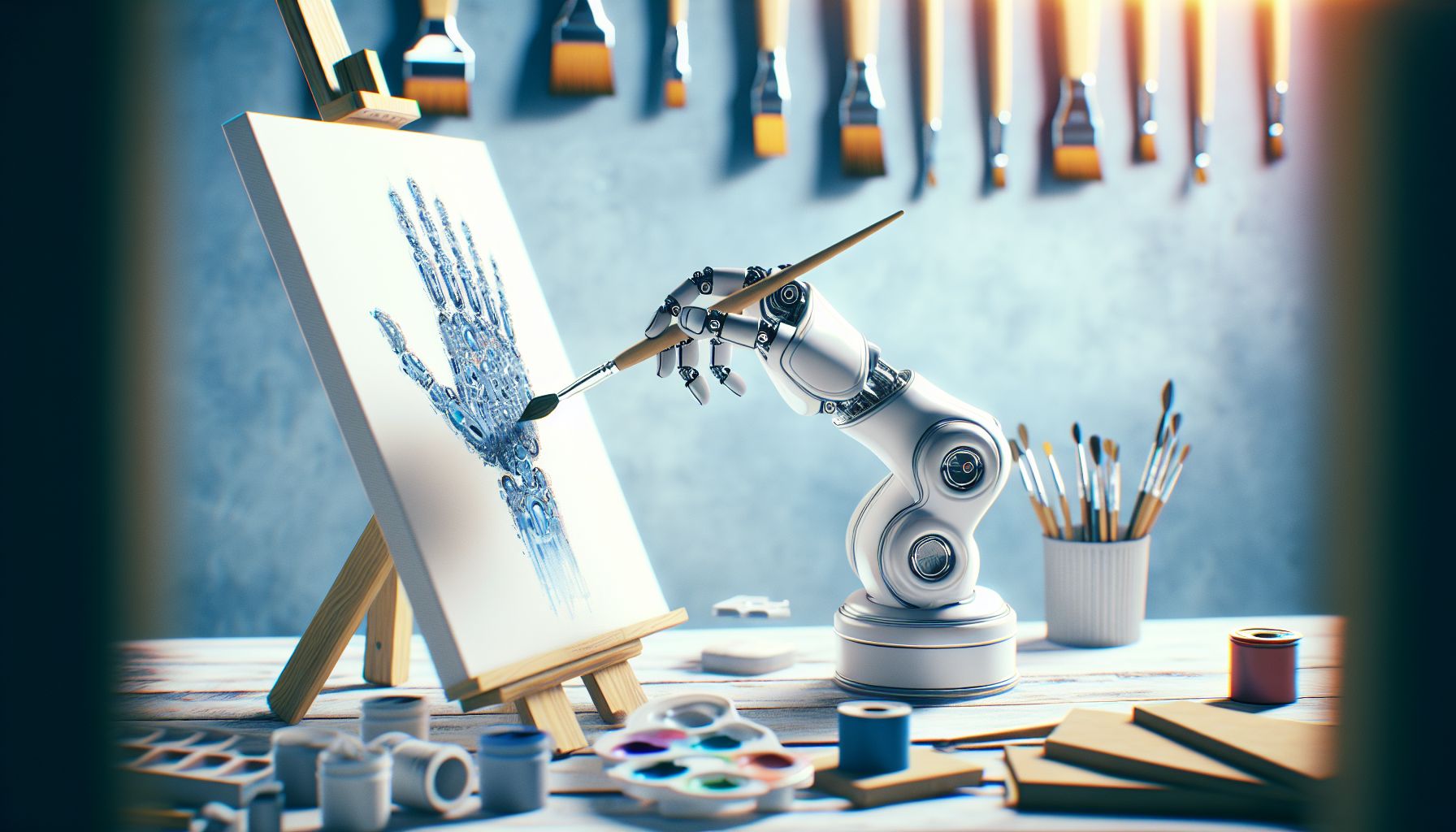
Greetings, fellow tech enthusiasts! Let’s dive into a topic that’s recently been tickling the creative neurons of artists and engineers alike: artificial intelligence in the creative arts. You heard me right! Our old friend AI isn’t just crunching numbers, driving cars, or foiling cyber villains. It’s dabbling in the world of Van Gogh and Mozart, Picasso and Beethoven, painting canvases and composing symphonies. And, as someone who’s always had two left thumbs when it comes to anything artistic, this news is as exciting as it is perplexing.
AI, The Unconventional Artist in Residence
Let’s start with a story. Picture me at a museum, standing slack-jawed before a piece of art. Not that there’s anything unusual about that, art often leaves me wondering and slightly confused. But this piece was different. Friendly museum guide informs me it’s created by an AI, and my head nearly explodes. I mean, ML algorithms wielding paintbrushes? Mind-blowing stuff.
AI technology, especially deep learning, has made huge leaps in generating art that impresses even the pickiest human critics. Artists can’t stop talking about tools like OpenAI’s DALL-E and Google’s DeepDream. These programs transform simple text descriptions into complex images that are sometimes more surreal and captivating than traditional art. Sometimes I wonder if that’s because they’re not bound by our human hang-ups about what art “should” look like.
The Algorithms Behind Creativity
So, how does this work? Enter Generative Adversarial Networks (GANs), which I like to think of as the Michelangelos of Machine Learning. A GAN has two competing networks: the generator creates images, and the discriminator evaluates them. They play a game of cat and mouse, “learning” over time to produce images closer and closer to what we might call art.
Then there’s StyleGAN, which tackles the trickier challenges of art by building on top of GANs. It can blend artistic styles or create facial images so realistic that you’d swear you just saw that person last Friday night in a crowded bar. The marriage of technical precision and artistic flair has some pretty wild implications for creativity, a term we’ve always thought belonged exclusively to humans.
What Does This Mean for Artists?
We’ve all heard the concerns. Will AI replace artists? I really hope not. But looking at how technology has always intersected with art, I see a future where AI enhances rather than replaces. I talked to a friend who’s been a digital artist for years, and she told me AI is like getting a new brush or a digital palette. Enhancement, not replacement.
A Tool, Not a Tyrant
For many artists like her, AI is becoming incredibly useful. Think about Adobe’s Sensei, which automates tedious tasks and leaves more time for actual creative work. Imagine editing a photo manually pixel by pixel (something I’ve done and immediately regretted), and then think of AI adjusting color balance or spotting flaws with a single click. It’s like having your masterpiece backed by deep learning.
Artists are using these tools to explore new territories, breaking through creative barriers they’ve been hitting for years. I call them the “Happy Little Accidents” that AI Bob Ross would be proud of.
Challenges: Not All Rainbows, But a Work in Progress
Before you start picturing an AI renaissance, let’s be realistic. AI art faces real challenges. Ethical concerns come up constantly around authorship and intellectual property. If an AI creates something beautiful, who gets the credit? Some people argue for shared ownership, but it’s still a messy debate.
Then there’s the question of art’s essence. Can creativity really be digitized? While AI can mimic emotion or sentiment, many argue that without consciousness, AI can’t create truly soulful art. The algorithms might be impressive, but they’re not sitting in cafés sipping espressos and pondering existence.
Overcoming Tectonic Hurdles
Still, these challenges create opportunities for conversation rather than dead ends. Artists, ethicists, and technologists are having intense discussions about these emerging questions. They’re finding new ways to integrate tech tools into traditional methods, creating entirely new forms of expression.
I was blown away when artist Jake Elwes used AI to create “The Zizi Show,” which challenges ideas of binary gender expression using AI-generated drag performers to explore identity. Talk about showtime, AI-style!
The Curtain Rises on Unexplored Frontiers
We’re watching AI transform from an abstract concept into real artistic creations. As the tech gets better, its creative potential becomes even more incredible. And as AI becomes more embedded in our society, the range of its artistic contributions will expand in ways we can barely imagine.
Looking Ahead
The future possibilities are wild: AI curating art galleries that adapt in real-time to visitor emotions, AI co-composing with musicians, or even collaborating with playwrights. Is this speculation? Sure. But I think the answer lies in building an inclusive ecosystem where creativity finds new forms through human-AI collaboration.
So, folks, don’t pack away your easels or instruments yet. Instead, embrace this fascinating world where silicon and creativity merge, transforming brushes and notes into incredible innovations. AI’s influence on the arts won’t crash down like a cymbal but will echo through the creative world for generations, creating infinite beat drops and brushstrokes we haven’t even dreamed of yet. Catch the rhythm of this evolution, and who knows? You might find yourself standing in a museum, amazed by art’s new face. Or should I say, interface?