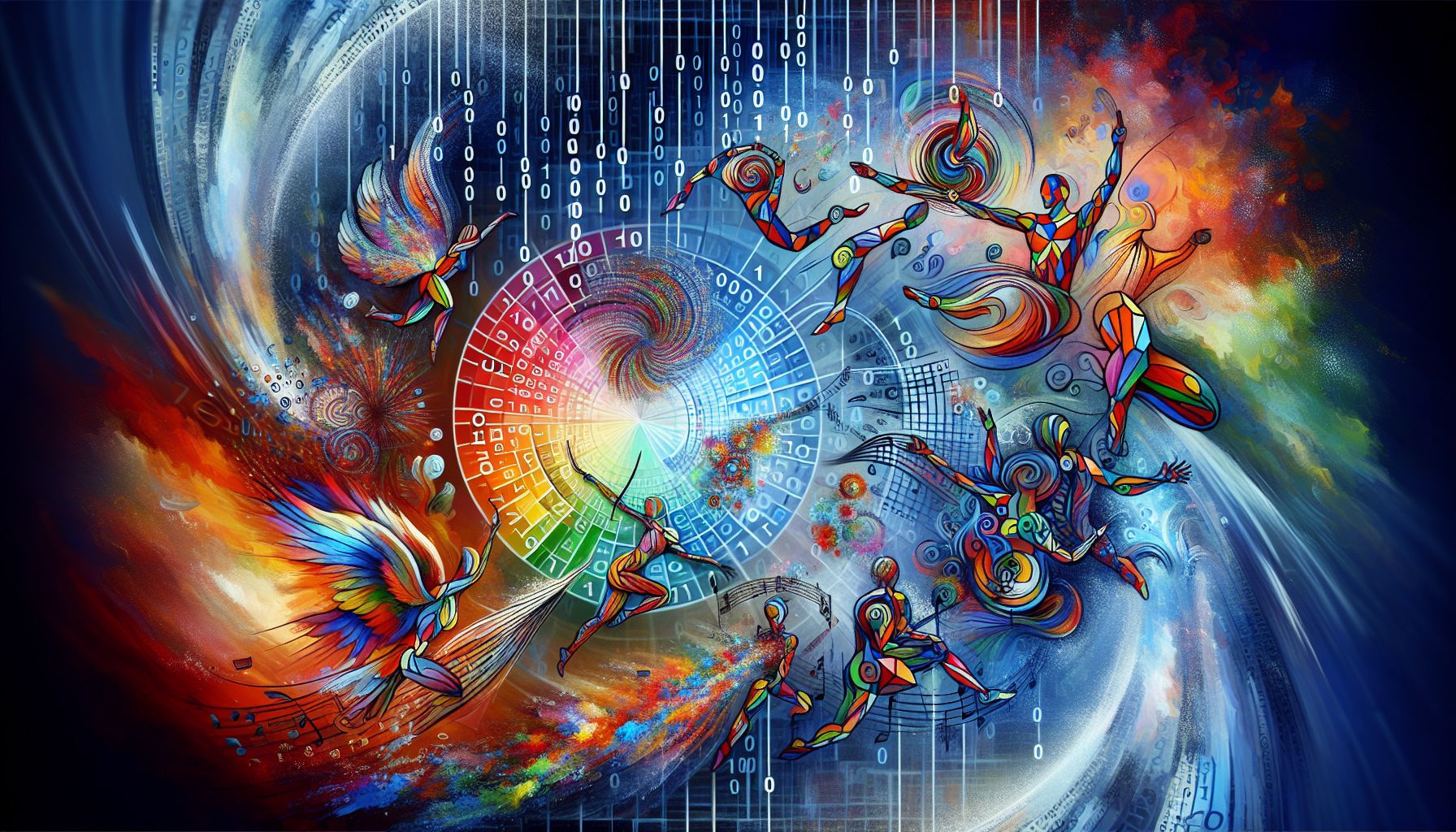
Hey tech enthusiasts, fellow AI nerds, and anyone else serendipitously scrolling past my corner of the internet! Today, I’m absolutely buzzing with excitement to talk about something that’s been at the forefront of my mind lately—Artificial Intelligence and its ever-more-intimate entanglement with the world of creative arts. If you’re like me and get giddy at the thought of machines drawing pictures or writing poetry, then keep reading. We’re in for a wild ride through the digital art renaissance powered by algorithms!
The Brushstrokes of Code: AI in Visual Arts
The idea of a robot painting a masterpiece might once have been more sci-fi than plausible reality. Fast forward to today, and AI is creating visually impressive artwork while challenging us humans to rethink creative ownership and value. Remember that auction where an AI-generated portrait sold for a whopping $432,500? Yeah, even deep learning algorithms have a taste for the high life! The software behind this, created by the Paris-based collective Obvious, uses a Generative Adversarial Network (GAN), a fancy word for a system where two neural networks duke it out to create better and more polished images. It’s a modern twist on the apprentice-master dynamic, except both happen to be digital.
As a guy who dabbles in digital art, watching a computer go on this artistic journey is mind-blowing. Software like DeepArt and tools developed by companies like RunwayML let creators at all levels take those neurons for a spin, turning pixels into Picasso-esque wonders. I once threw my vacation photos into a neural network. The results were, well, let’s just say I didn’t know my beach selfies could look so oil-painted!
The Symphonic Algorithms: AI in Music
Shift that focus knob a little, and AI’s getting in tune with music too. Whether composing the next best symphony or spitting out synthwave beats that would make Stranger Things fans drool, AI isn’t just listening to music anymore. It’s becoming the composer. Tools like Amper Music and OpenAI’s MuseNet can whip up tracks across genres, even classical, jazz, or electronic, like they’ve been jamming to Spotify for years.
I admit, when I first tried out an AI music generator, I was skeptical. Would my playlist consist of elevator music or something resembling a cat walking across a piano? To my pleasant surprise, AI does have some rhythm! The song it crafted sounded like a dreamy, synth-infused lullaby that I embarrassingly added to my chillout playlist.
The Pen is Mightier (and Machine Assisted): AI in Writing
AI has also taken to the page, popping up in creative writing with machine-generated narratives, articles, and even poetry. GPT-3 by OpenAI is one of those neural networks that can churn out human-like text with such proficiency, you’d half-expect it to start tapping out Shakespearean sonnets if you weren’t looking.
Now, I’ve sat down with GPT-3, metaphorically speaking, and crafted stories that ranged from heartfelt to hilariously nonsensical. Is it perfect? Nope, but the technology offers a tantalizing glimpse of what’s possible. Imagine a writer’s room where machines support human creativity, suggesting plot twists or character arcs that our conscious brains might never have conjured. It’s the ultimate brainstorming partner that doesn’t get mad when you insist on taking all the credit!
Challenges and Ethical Quandaries
Of course, no techno-utopia would be complete without addressing those rain clouds on the horizon. As AI arts continue to flourish, questions about authorship, intellectual property, and ethics naturally spring up. Is an artwork created by code still an artwork? If an AI writes a book that becomes a bestseller, who gets the royalties? More crucially, does a machine have something resembling an artist’s soul? (Okay, that last one’s more philosophical than practical, but it’s fun to ponder over a coffee.)
Then there’s the issue of bias. Algorithms learn from existing data, which, like it or not, can sometimes reflect human prejudices. Creators need to be vigilant to ensure their AI tools don’t reinforce or amplify these biases, inadvertently perpetuating, or worse, originating content that might not be socially acceptable.
The Future’s Picasso or Pip? You Decide!
Even with these challenges, the future feels tantalizingly close and packed with potential. Imagine a world where children learn painting with brushes and AI-powered tools that adapt to their styles. Or a music scene where collaborative albums between rock bands and AI are the norm!
This isn’t about replacing human creativity. It’s about enhancing it. Just as the camera didn’t spell the end for painters, AI in the creative arts is less a competitor and more a collaborator, pushing boundaries and expanding what we thought possible.
So, as we tiptoe or leap into this brave new artistic digital frontier (depends how fearless you are), let’s keep an open mind, a critical eye, and maybe, just maybe, a bit of excitement. The age of AI-powered creativity is here, and it’s time we start reveling in the symbiotic relationship between human imagination and machine ingenuity. Keep dreaming big and keep creating!
Now, time to grab another cup of coffee and see what else these algorithms have up their silicon sleeves. Cheers till next time!