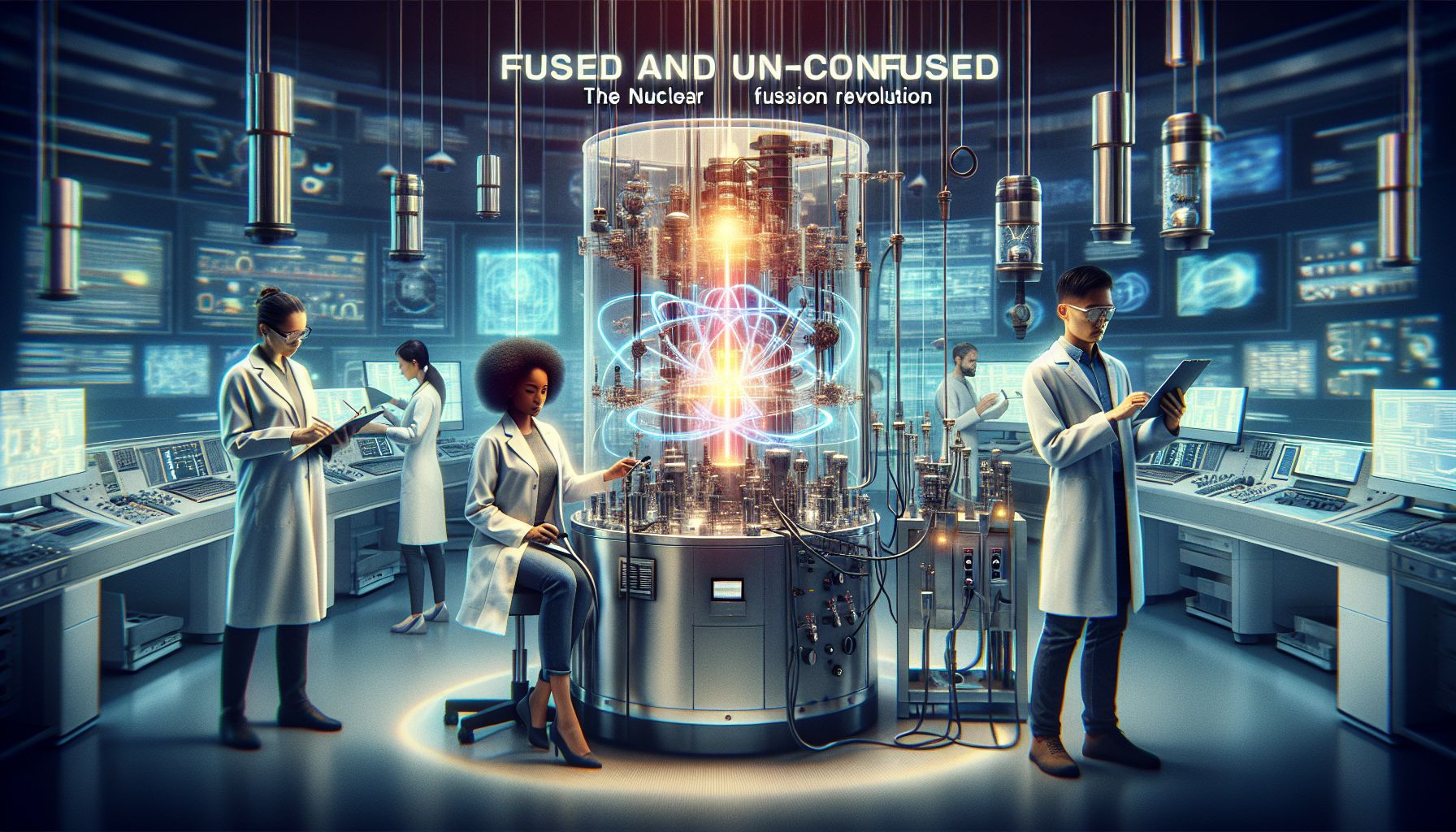
Hey tech enthusiasts and future-minded folks! Buckle up because today we’re diving into the electrifying (pun intended) world of nuclear fusion. I mean, who doesn’t dream of a future where the sun’s power is harnessed in a bottle, right? As someone deeply invested in tech and the way it shapes our tomorrow, I can’t help but geek out at the potential here. If you’ve always thought of fusion as that daunting, sci-fi wildcard, hang tight – I’m here to demystify it for you, one tokamak at a time.
The Dream of Fusion
For as long as we’ve looked up at the stars, humans have been dreaming about harnessing their power. It’s like the ultimate in “if you love it, set it free” paradoxes: we love stars, but we’d like to box their energy up to power our coffee makers. If you ask the folks at places like ITER or the National Ignition Facility, they’ll tell you that, yes, this dream is more alive than ever.
The big idea is to bring two light atoms together, make them high-five at an atomic level, and release a whole lot of energy in the process, more than what you put in. It’s clean, immensely powerful, and, most importantly, it’s nearly unlimited. Picture this: energy production without greenhouse gases, and fuels so abundant they’re virtually inexhaustible. If you’re thinking, “This sounds too good to be true,” well, the challenge so far has been turning this scientific cathedral of potential into a down-to-earth power station.
Technology That’s Hotter Than the Sun
I’m not being hyperbolic here—fusion requires temperatures ten times hotter than the sun’s core. The most popular way to wrangle this inferno is using a device called a tokamak, a doughnut-shaped chamber with magnetic fields that keep everything contained (consider it an overly aggressive hug). And it works because at such high temperatures, hydrogen atoms are more amenable to combining.
Recent advances have been coming thick and fast, which is what has got me so excited these days. Just last year, researchers at JET (Joint European Torus) in the UK announced they set a new record for energy production, a whopping 59 megajoules. It’s still not a net energy generator, but it shows how far we’ve come from fusion fantasies to genuine science.
Boiling Down the Science
Sure, there are other approaches like the stellarator, which sounds like a Pokémon but is a real deal; it aims to solve some of tokamak’s constraints by twisting things up a bit. And thanks to materials science making leaps and bounds, we finally have materials that can withstand the intense conditions within these reactors.
Fusion research is the ultimate grind. We’re talking cutting-edge physics, materials science, and engineering all wrapped in a single, highly volatile package. It reminds me a bit of those endless nights debugging code only to find out the issue was a missing semicolon. It takes patience, a dash of stubbornness, and a ton of innovation.
The Economic Upside
If you think the science is cool, wait till you hear about the economic potential. Imagine a world where energy is so plentiful that scarcity is no longer in our vocabulary. Cheap energy could lead to a renaissance in technology development, feed into desalination projects to tackle water shortages, and even power the elimination of some pesky greenhouse gases.
Remember those dystopian sci-fi movies where mega corporations control dwindling resources? Fusion energy could turn that narrative on its head. Clean, abundant energy offers a shot at equilibrium, a more equitable distribution of resources. Imagine a future where energy poverty is a forgotten term because fusion made energy cheap and accessible.
The Challenges Are Real, But So Are the Solutions
Not to burst our utopian bubble here, but let’s keep it real: there are hefty challenges. How do we efficiently extract and use the heat produced? What about the initial capital investment and political will needed to scale this tech? Also, how do we ensure these developments don’t stay confined to superpower tech hubs but reach the broad swathes of our planet where they could do the most good?
For every hurdle, there’s also a proposed leap. Startups and fresh names in the tech industry are approaching these issues with the creativity that comes naturally to what I like to call “Silicon Valley Problem Solving.” Companies like Helion and Commonwealth Fusion Systems are even talking timelines not in the realm of “someday,” but “in the next few decades.” And when Elon Musk’s name pops up in the conversation, you know things have gone from iffy to downright promising.
Looking Forward: From Sci-Fi to Reality
So, what’s next in the tale of fusion? The path forward involves more than just solving technical challenges. It’s about building a roadmap where policymakers, scientists, and industry leaders align to turn laboratory success into commercial viability.
This journey might involve a few more “back to the drawing board” moments, but hey, that’s innovation. Remember, we didn’t power the planet on fossil fuels overnight, and we’re not aiming to redo the energy framework overnight either. We’re working to fit fusion into our grid like a good plot twist fits a thriller novel. But make no mistake, we’re inching closer. What was once the stuff of sci-fi is moving closer to reality, and I’m here for the ride.
So, while it’s easy to dismiss fusion as a futuristic pipe dream, it’s time to take this seriously. The breakthroughs are happening now. Who knows? In a few decades, we might all be looking back and saying, “remember when…” as we sip fusion-brewed coffee, enjoying the clean, boundless energy that seemed impossible just a few years ago. Cheers to a future that’s literally powered by the stars!