Hey everybody! It’s your friendly neighborhood tech enthusiast here, diving into a topic I’ve been itching to explore: the fantastic world of AI in the creative arts. Now, I know what you’re thinking: “AI and creativity? Aren’t those polar opposites?” Well, pull up a chair, because today’s post is about breaking that very myth. Artificial Intelligence has been making waves across various domains, but its move into the creative arts is especially intriguing, and honestly pretty mind-blowing.
The Robin to Your Batman: AI as a Creative Partner
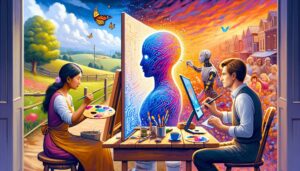
Let’s kick things off with how AI is changing things for artists, musicians, and writers. We’ve always seen creativity as purely human territory. But what if I told you that AI is more like a sidekick than a replacement? Picture this: you’re a graphic designer staring at a blank canvas. You feed some parameters into your AI tool (maybe you want an Impressionist style with cool blues and fiery reds) and bam! The algorithm spits out a dozen different options. It’s like having Salvador Dalí and Van Gogh on speed dial, ready to brainstorm at a moment’s notice.
And it’s not just visual artists getting a leg up. Musicians are using AI to compose symphonies, suggest chord progressions, and even draft lyrics. Imagine a world where your favorite band collaborates with an AI to drop an album every month. Crazy, right? Well, not really. Tools like OpenAI’s MuseNet are already making this happen by blending styles and genres to create entirely new sounds. It’s not the death of music; it’s the birth of infinite possibilities.
The Da Vinci Code: Unlocking Artistic Potential
Alright, skeptics, I hear you loud and clear: “But isn’t creativity supposed to be unpredictable and chaotically human?” Absolutely, and that’s exactly where AI shines! By analyzing vast datasets of existing art, literature, and music, AI can identify patterns that might escape the human eye. But here’s the kicker: it doesn’t just predict; it innovates by generating unique compositions, completing unfinished symphonies, or creating alternate realities in film and animation.
Consider this: AI-powered tools are being used to conserve and restore ancient artworks. Projects like the Rembrandt Time Machine, where AI reconstructed a new Rembrandt painting using the master’s signature style, are blurring the lines between what’s original and what can be recreated. It’s a feedback loop of creativity and technology that lets artists experiment, refine, and push their limits without fear.
A Canvas of Code: The Tech Behind the Magic
Let’s dig a bit deeper into the technical magic making all this possible, without putting anyone to sleep (I promise!). At the heart of AI creativity are machine learning algorithms, neural networks, and a whole lot of computational horsepower. Take Generative Adversarial Networks (GANs), for example. These clever tools pit two neural networks against each other: a “generator” creates art and a “discriminator” critiques it, honing their skills as they go. The result? AI-generated creations that are sometimes impossible to distinguish from human-made art. Pretty wild, right?
But don’t worry, we’re not giving all the credit to the machines. There’s a ton of human talent involved in training these models. Designers and programmers work tirelessly to curate datasets, tweak algorithms, and refine outputs. It’s a beautiful collaboration between human intuition and machine precision, as harmonious as a Beethoven sonata.
The Looming Digital Renaissance: What’s Next?
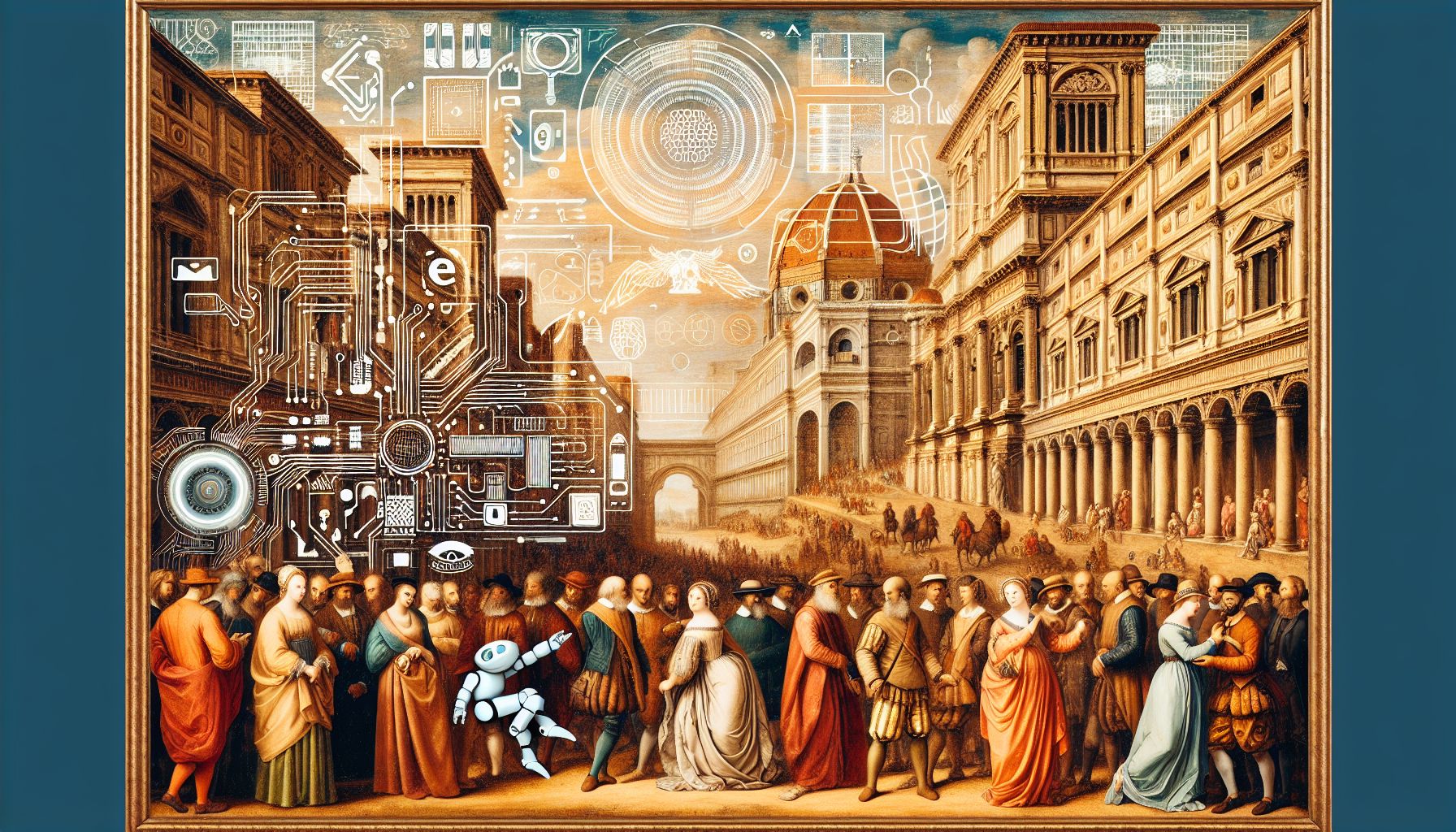
We’ve talked about the what and the how, so let’s look ahead. As AI continues to evolve, we’re entering an era where the barriers between human and machine creativity are dissolving. What does this mean for the art world? For starters, democratization. Aspiring artists who might not have had access to traditional training can use AI to explore and develop their talents without needing an expensive studio education.
But let’s not get carried away; there are real challenges to tackle. Authenticity, copyright, and the ethical use of AI-generated work are hot topics of debate. Who owns the rights to a piece created by an AI? How do you ensure cultural sensitivity in data-driven art forms? These questions need answering as we navigate this techno-creative frontier.
Wrapping Up
So there you have it folks, a whirlwind tour of AI in the creative arts. Whether it’s inspiring existing artists or sparking new ones, AI is reshaping how we create and appreciate art in ways we never thought possible. Far from being the enemy, AI is becoming an important tool in fueling a new artistic renaissance, one that’s inclusive, boundary-pushing, and above all, constantly surprising.
I’m genuinely thrilled to watch this space grow, and I hope this post has sparked a bit of that excitement in you too. Let’s keep the conversation going. What do you think? Is AI the greatest thing since sliced bread, or just an overhyped toaster? Sound off in the comments!
Related: Welcome to the Age of AI in Creative Arts: A New Renaissance