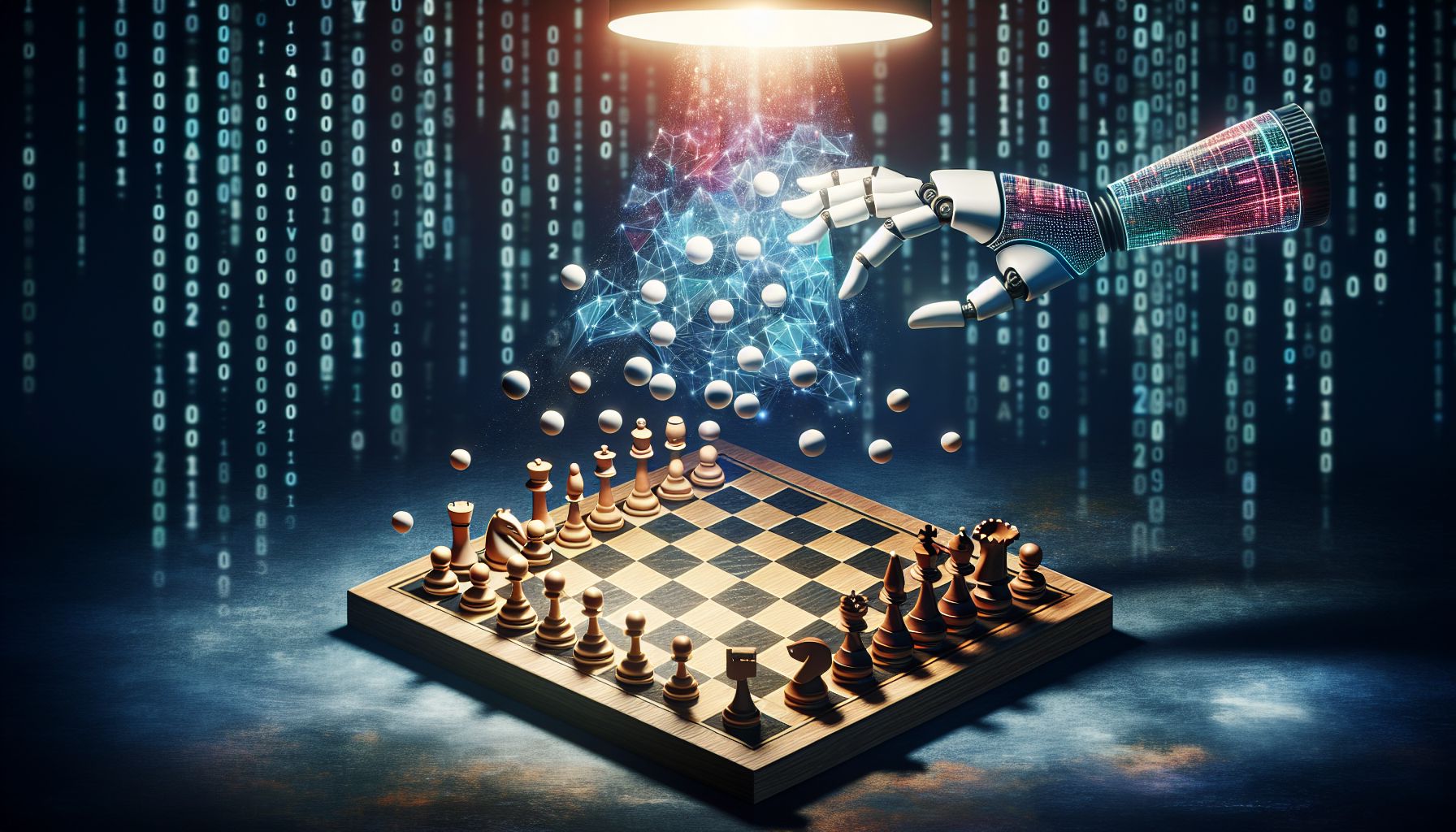
Hey there, tech enthusiasts! Grab your favorite mug of coffee, and let’s talk about something that’s been messing with my brain lately—Artificial Intelligence in the creative arts. Yeah, I know, AI isn’t just about crunching numbers or helping businesses make smarter decisions. It’s about to put on a beret, pick up a brush, and give Picasso a run for his money. Intrigued? You should be.
The Artistic Evolution of AI
When someone first told me about AI doing art, I almost spit my latte everywhere. I mean, computers? Making art? That was my gut reaction. But the more I dug into it, the more I realized this isn’t some sci-fi pipe dream—it’s happening. Right. Now.
The Genesis of Artistic Machines
Let me take you back to when computer-generated art first started. I’m talking about when a bunch of tech nerds began wondering, “What if our machines could paint?” Those random thoughts led to the first neural networks, which eventually became what we now call Generative Adversarial Networks (GANs). It was like a digital game of cat and mouse, with one network creating art and another tearing it apart, both getting better with every pixel.
From Algorithms to Aesthetics
Fast forward to today, and you’ve got AI tools like OpenAI’s DALL-E and Google’s DeepArt, which can sketch, paint, and compose music. It blows my mind how these programs went from glorified calculators to things that can actually create legitimate art. Sure, they might occasionally spit out something that looks like a cat-robot hybrid nightmare, but even Picasso had his off days, right?
You Thought Van Gogh Was Impressive? Meet AIVA
Picture this: you’re drinking your afternoon coffee, and your Spotify shuffle suddenly plays this orchestral piece that sounds like Beethoven but with something completely fresh about it. You check your screen, and surprise—it’s not by some long-dead European composer from the 1800s. Nope. It’s AIVA, short for Artificial Intelligence Virtual Artist.
Beethoven Better Watch Out
AIVA is an AI composer that’s been shaking up the music world. This thing isn’t just writing little ditties—it’s composing entire symphonies. And here’s the kicker: AIVA learns from the masters like Bach and Beethoven, breaks down their complex compositions, and then creates its own unique soundscapes. If Beethoven were alive today, he’d probably be dying to collaborate with this weird, brilliant digital maestro.
The Artistic Revolution: Pros and Cons
So, is AI the future of art? Honestly? It’s complicated. Like any major shift, there’s a whole mess of conflicting feelings here.
The Sunny Side of AI Art
There’s genuinely exciting stuff happening here. For starters, it makes art accessible to people who never had the tools or training before. Plus, it creates incredible opportunities for human-AI collaboration. Imagine sketching out an idea for a painting, setting the emotional tone, and having AI execute it with precision that would make Michelangelo jealous. It’s like having a creative partner with infinite patience and superhuman skills.
The Storm Clouds Looming
But (and there’s always a but), it’s not all sunshine and rainbows. Critics argue that AI lacks the ‘soul’ that makes human art special—and honestly, I get that argument. Are we opening Pandora’s box here, turning art into something more mechanical and less magical? And what happens to struggling artists when machines can crank out masterpieces in seconds? It’s a double-edged sword, no question about it.
Future Speculation: A New Renaissance or Robotic Regurgitation?
Let me balance out all this heavy stuff with some wild speculation—because honestly, who doesn’t love a good prediction?
Humans and Bots, In Sync
I can imagine a world where AI doesn’t replace artists but supercharges them. A writer might use AI to explore dozens of plot variations instantly, or a painter could experiment with color palettes in ways that were never possible before. If we handle this right, AI could trigger a creative renaissance that makes the original Italian one look quaint.
Or a Glut of Content?
On the flip side, we might end up drowning in mediocre content. If everyone becomes an “artist” thanks to AI, does art lose its meaning? Or does it just become more diverse? AI definitely opens doors, but it’ll also force us to rethink what we value in art and why.
Conclusion: Embracing the Creative AI Wave
Look, whether you’re a traditionalist who still mixes paint by hand or a tech enthusiast building digital masterpieces, AI’s impact on creative arts is a ride we can’t ignore. It’s wild, unpredictable, and teetering somewhere between chaos and brilliance.
So even though some people want to dismiss the idea of an algorithm painting the next “Starry Night,” the truth is AI’s already here with a paintbrush in its digital hand. Just make sure you grab a front-row seat for this show, because it’s going to be absolutely insane. Until next time, stay curious and keep an open mind!